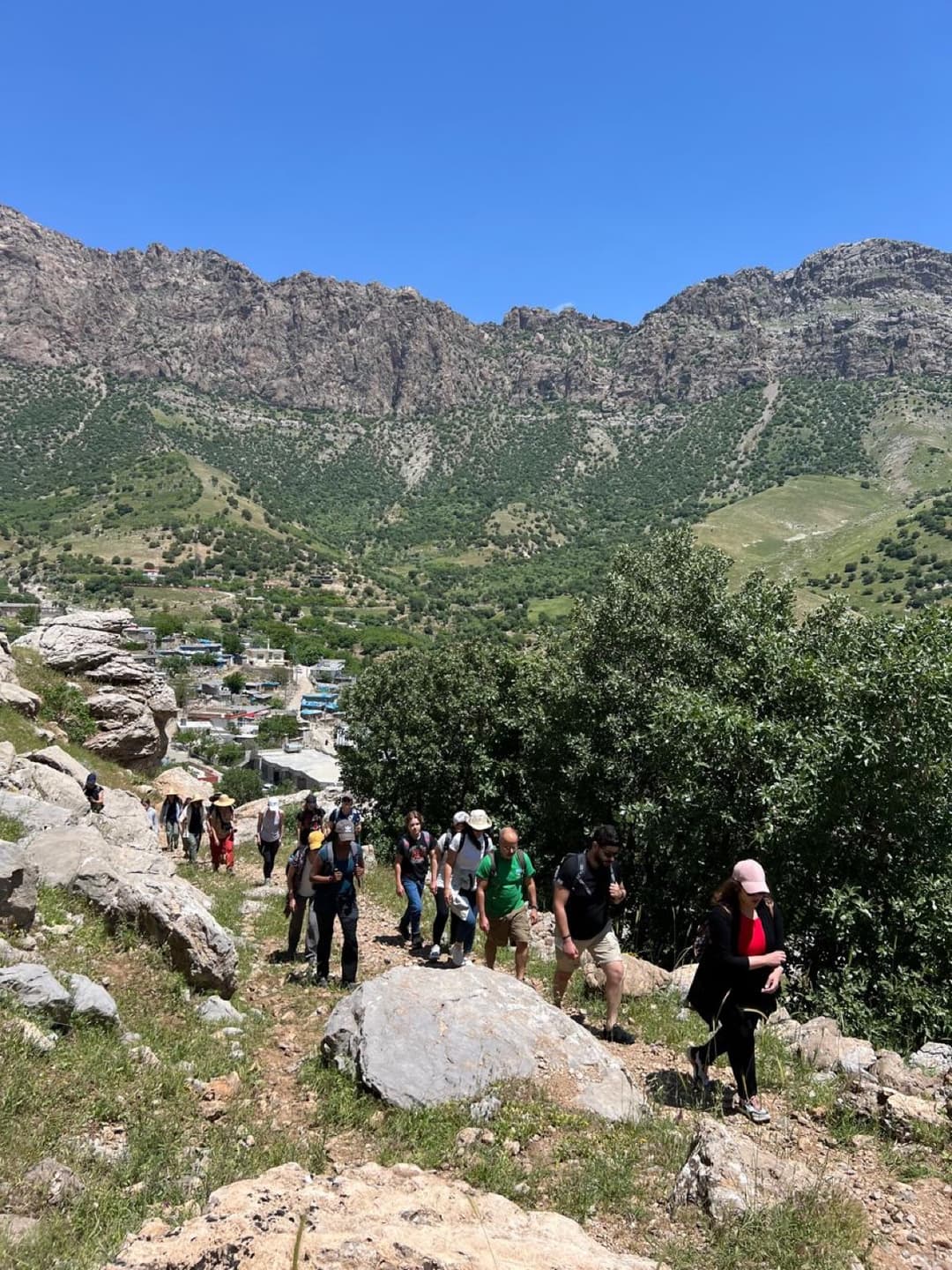
Akre: Walking Through History in the Zagros Mountains
Akre is one of the most beautiful historic towns in the Kurdistan Region. Internationally, it is best known as the city of Newroz, where thousands gather every year to celebrate the Kurdish New Year. Yet Akre offers much more than its famous festival. For hiking enthusiasts and history lovers alike, it is a destination where spectacular landscapes and thousands of years of history come together.
The old town is built in terraces along a steep mountainside and is crowned by the impressive remains of a medieval fortress. From the castle ruins, hikers are rewarded with breathtaking panoramic views over the town and the surrounding valleys. Beyond the fortress, the trail continues into the rugged beauty of the Zagros Mountains.
The route follows centuries-old mountain paths and includes sections of ancient rock-cut stairways that have connected the mountain slopes for generations. Along the trail, visitors can also discover countless marine fossils embedded in the limestone, remnants of the ancient Tethys Sea that covered this region millions of years before the Zagros Mountains were formed.
This hike offers a unique combination of nature, geology, archaeology, and cultural heritage, making it one of the most rewarding walking experiences in the Kurdistan Region. Whether you are fascinated by history, captivated by mountain scenery, or simply enjoy exploring places off the beaten path, Akre provides an unforgettable journey through both time and landscape.
Raban-Merquli: A Parthian Fortress in the Mountains
Hidden high in the western Zagros Mountains lies Raban-Merquli, one of the most remarkable archaeological sites in the Kurdistan Region. This impressive Parthian fortress, dating to the first centuries AD, guards a mountain pass and offers spectacular views over the surrounding valleys.
The hike leads through the remains of the ancient fortified settlement, where visitors can explore massive defensive walls, gateways, monumental rock reliefs believed to depict local rulers, and the remains of a sanctuary often associated with the goddess Anahita. Numerous architectural remains provide a fascinating insight into Parthian military architecture and mountain settlements.
Combining outstanding archaeology with dramatic mountain scenery, Raban-Merquli is one of the region’s most rewarding heritage hikes.
The Safeen Mountain Pilgrimage Trail: Christianity in the Zagros
For centuries, the slopes of Mount Safeen have served as places of pilgrimage, solitude, and worship. This unique hiking route follows ancient paths connecting remote Christian hermitages, chapels, and caves that continue to be visited by the local Christian community today.
Along the trail, visitors encounter sites associated with Rabban Boya, the Cave of Saint George (Mar Giwargis), and other historic places of devotion nestled among the limestone cliffs. The peaceful mountain landscape provides a remarkable setting to learn about the long Christian tradition that has shaped this region for over 1,500 years.
This hike offers a rare opportunity to experience living religious heritage while exploring one of Kurdistan’s most scenic mountain environments.
Khanzad Castle: The Legacy of a Kurdish Princess
Perched above the surrounding landscape, the ruins of Khanzad Castle stand as a reminder of the power and influence of the Soran Emirate.
Named after the Kurdish princess Khanzad, one of the region’s most celebrated female rulers, the fortress reflects an important chapter in Kurdish history. During the hike, visitors explore the surviving defensive walls and architectural remains while learning about the political history of the emirate and the remarkable woman who gave the castle its name.
The trail combines historical storytelling with panoramic mountain views, making it an ideal destination for those interested in Kurdish history and architecture.
Shush: A Journey Through Faiths and Civilizations
The village of Shush offers one of the most diverse cultural landscapes in the Kurdistan Region.
The hike begins in the village, home to an active Sufi order that continues centuries-old spiritual traditions. Nearby stands a beautifully restored historic synagogue, a reminder of the once-thriving Jewish communities that lived throughout Kurdistan.
From Shush, the trail continues through the mountains to the ruins of Mar Odisho Monastery, one of the region’s most important early Christian monastic sites. Facing the monastery is a vast limestone cave that contains a small rock relief estimated to be around 3,000–4,000 years old, linking the landscape to even earlier civilizations.
This extraordinary route brings together Islamic, Jewish, and Christian heritage, alongside prehistoric and ancient archaeological remains, making it one of the most culturally diverse hiking experiences in the region.
Der Kukh: The Hidden Monasteries of the Mountain
Jabal Maqlub is more than the home of the famous Mar Matti Monastery. The mountain preserves the traces of a much wider early Christian monastic landscape, where monks and hermits lived, prayed, and established communities among its caves, springs, and secluded valleys.
On the less-visited side of the mountain lie the ruins known locally as Der Kukh, traditionally identified with the ancient Dēra d-Rīshā (“Monastery of the Head”). The monastery is associated with important figures of early Syriac monasticism, including Rabban Hurmizd.
Our hike explores this lesser-known heritage landscape, connecting the visible remains with the stories of the monks who once inhabited these mountains. It offers a chance to look beyond the famous monuments and discover the archaeological landscape, religious history, and living heritage of Jabal Maqlub.
A hike for those who want to discover the hidden layers of Mesopotamia, beyond the famous sites.